
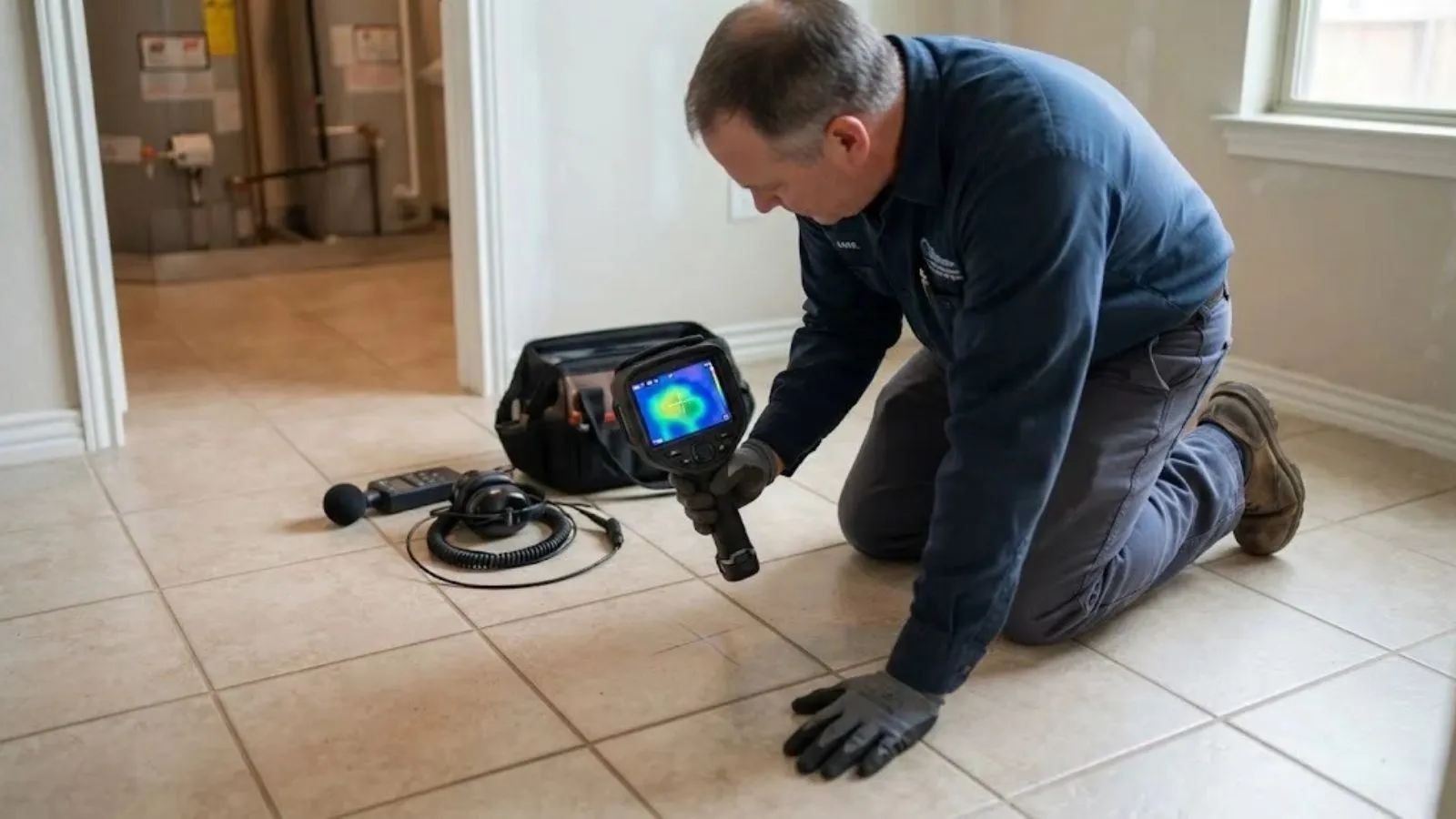
How a plumber listens, pressurizes and scans for a hidden leak
No single tool finds every leak, so a technician matches the method to the symptom. Acoustic listening uses sensitive microphones on floors, walls and pipe fittings. A pressurized pipe that is leaking makes a faint hiss or rushing sound, and the sound is loudest right above the break. It works best on metal pipe and in quiet conditions. It struggles on plastic pipe, which carries sound poorly, and near traffic or a running appliance.
Pressure testing isolates one section of pipe, then watches a gauge. If the gauge drops with nothing running, that section is losing water. This does not show where the leak is, but it proves which branch to chase and which branches are fine. It is the quickest way to split a hot line from a cold line, or the house side from the yard side.
Thermal imaging shows temperature differences on a surface. A leaking hot line warms the drywall or flooring around it, and a cold line chills it. The camera shows a pattern, not a pipe, so it narrows the search to a patch of wall. It cannot see through thick insulation or deep soil, and it can mislead near a sunny window or a heating vent.
Tracer gas is the method for stubborn cases. A safe, non-toxic mix of hydrogen and nitrogen is pushed into the emptied line, and a sensor sniffs the surface for the gas escaping upward. It can find very small leaks that sound and heat will miss. Pipe locating traces where a buried line runs, so a probe or excavation lands in the right place. Locating finds the pipe, while the other methods find the leak in it.
The meter test for a leak: every tap off and the meter still turning
You can check for a leak yourself in about half an hour, before anyone arrives.
- Stop all water use. Close every faucet, make sure no one flushes a toilet, and pause the dishwasher, washing machine and ice maker.
- Find the meter. It is usually in a covered box near the curb or property line. Lift the lid carefully, since insects and debris like these boxes, and read the dial.
- Look for the low-flow indicator. Most meters have a small dial, triangle or star that spins when even a trickle moves through. If it turns with everything off, water is going somewhere.
- Write down the reading and wait. Note the numbers, wait 30 to 60 minutes with no water use, then read again. A changed number confirms a leak.
- Close the main house valve and test again. If the meter stops, the leak is inside the house side of the valve. If it keeps turning, the leak is between the meter and the valve, which points to the buried line.
High water bill with no obvious cause: calling the City or a plumber
A high bill is not always a leak. Summer irrigation, a guest stay, a filling pool or a new household member can all raise usage. The meter test above separates real leaks from ordinary use, because a true leak shows movement when the house is quiet. A frequent hidden cause is a toilet flapper that lets water seep into the bowl all day with no sound.
Call a plumber when the meter moves with the house valve open and stops with it closed, or when you see damp spots, hear running water or smell mustiness.
Call the City of Colton Water Utilities Department, using the customer service number on your bill, when the meter keeps moving with the house valve closed, when the meter box itself is wet, or when the reading looks wrong. The utility handles its own meter and the line up to it, while the pipe after the meter is generally the property owner's. Confirm exactly where that line is drawn with the utility.
Stain on a ceiling or wall: tracing the water to its real source
Water travels. A brown ring on a ceiling may sit several feet from the pipe that caused it, because water runs along joists and drywall before it shows. A technician starts by asking when the stain appeared, whether it grows after showers or only after rain, and whether it appears near a bathroom, a water heater or the roof.
That history separates a plumbing leak from a roof leak or air conditioner condensation. Moisture meters read the dampness behind paint, and thermal imaging shows whether the wet area is warm like a hot line or cool like a cold one. If the stain only grows when it rains, a roofer is the right call and we will say so. A stain that grows with no rain or with certain fixtures running points to supply or drain pipes.
Opening a wall is the last step, not the first. Once the source is located within a few inches, the cut is small and the drywall patch is simple. Keep the stained material until the repair is finished, and take photos for your records before anything dries out.
Leaks under the house and in the crawlspace
Homes on a raised foundation have a crawlspace under the floor, and that space hides plumbing that is easy to reach but easy to ignore. Signs of a leak there include soft or bouncy floor sections, a musty smell, dark staining on subfloor wood, and pest activity. Water also tends to puddle where the soil is lowest, not where the leak is.
Because the pipes are exposed, detection is often simple. A technician can inspect fittings, valves and hangers by flashlight and pressure test each branch. The hard part is that a small drip can wet the same spot for months. Wood rot, mold and damaged insulation can follow, so a found leak should be repaired and the area dried.
Homes built on a concrete slab have no crawlspace, and their leaks are a different problem. If you suspect water under a slab floor, see our guide to slab leak repair.
Buried supply lines, sprinkler leaks, and wet spots in the yard
A leak in the line between the meter and the house shows up as a soggy patch, unusually green grass, a sunken strip of soil or a meter that spins with the house valve closed. Locating the pipe and listening along its path can narrow the break to a few feet. Confirming it, then choosing a spot repair or replacement, is covered on our water line repair page.
Irrigation leaks look similar but are usually on a separate line with its own shutoff. A cracked sprinkler head, a split lateral or a stuck valve can waste water for weeks. Turn the irrigation controller off and redo the meter test. If the meter now stops, the leak is on the sprinkler side, and a pressure test of each zone points to the broken one.
For pools and spas, the first question is whether the loss is evaporation or a leak. A simple bucket test, comparing the water drop in the pool with a bucket of water on the same step, separates the two. If the pool loses more than the bucket, a pool leak specialist should test the shell and plumbing, and we can check the supply and fill lines on the house side.
A wet meter box or hose bib area can also be a small leak at a fitting, a cracked box lid seal or a failing shutoff valve. These are often quick to confirm and quick to fix.
Leak detection methods compared: what each finds and where it falls short
Technicians often combine two or three of these on the same visit.
| Method | Best for | Honest limit |
|---|---|---|
| Acoustic listening | Pressurized metal pipes in walls, floors and yards | Weak on plastic pipe and in noisy surroundings |
| Pressure test | Proving which pipe branch is losing water | Shows that a leak exists, not where |
| Thermal imaging | Hot water leaks, wet drywall, radiant patterns | Shows a zone, not the pipe, and can be fooled by sunlight |
| Tracer gas | Small or hidden leaks that sound cannot reveal | Needs the line emptied and a path for gas to rise |
| Pipe locating | Finding where a buried line runs | Finds the pipe, not the leak itself |
Moisture meters and visual inspection support every method on this list.
Colton homes and hard water: clues a leak leaves behind
The City of Colton's 2024 water quality report lists average hardness at about 207 mg/L, which is roughly 12 grains per gallon. Hard water leaves white or tan crust where it evaporates, so a crusty ring on a fitting, a valve or the underside of a sink is a clue that it has been dripping for a while. Mineral buildup can also partly seal a pinhole and make a leak come and go.
About 52 percent of Colton homes were built before 1980, according to the City's housing data. Older supply pipe has had more years of use, so a leak on an older house is more likely to come from wear at a joint or a corroded section than from a recent mistake. That does not mean your pipes are failing, only that an age-related cause is worth checking.
The City's water utility serves about 90 percent of Colton proper. If your bill comes from a different provider, call that provider for questions about the meter and the line up to it.
What decides the cost of finding a leak
Detection cost depends on how hard the leak is to reach and how many methods it takes. We do not quote a number over the phone because the symptom alone rarely shows the real job.
Active leak right now: what to do before the technician arrives
If water is spreading, treat it as urgent and call the 24/7 line. Dispatch is available at night and on weekends, and same-day appointments are available when schedules allow. These steps limit damage while you wait.
- Close the main water valve. It is usually near the front of the house, at the water heater or where the line enters the garage. Turn it fully clockwise.
- Stay clear of wet electrical areas. If water is dripping from a light fixture or reaching outlets, turn off power to that area at the panel only if you can do so safely and dry, and keep people away.
- Open a low faucet. With the main closed, opening a faucet at the lowest point drains the line and relieves pressure on the leak.
- Move belongings and photograph the damage. Lift furniture off wet floors and take clear photos and video for your insurance claim before drying.
- Do not cut into the wall yourself. Cutting at a guessed spot often misses the pipe and adds repair cost. Let the technician locate it first.
A located leak is only half the answer: patch, reroute or replace
Finding the leak does not decide how to fix it. A single failed joint can be repaired in place. A pipe with several pinholes along its length is telling you the metal is wearing out, and patching one hole may only move the failure.
After the leak is located, we explain the options in plain terms, including the repair, the longer term alternative and the tradeoffs. If the evidence points to widespread wear, a repiping estimate may make more sense than repeated patching. Ordinary leak repair is done by the same crew that finds the leak, so you do not need to hire a second company.
Leak detection for shops, offices and multi-unit buildings
Commercial leak detection uses the same methods, but the stakes and access issues differ. A tenant may share a meter with others, a line may feed several units, and shutting water off can close a business. We locate the leak, then plan the repair around the building's hours where we can.
Larger buildings sometimes need records from the property manager, such as which valves isolate which suite. For ongoing building service and larger repairs, see our commercial plumbing page. Properties near Valley Blvd and the I-10 and I-215 corridor can call the same 24/7 line, and our crews also serve Grand Terrace and nearby towns.
Frequently asked questions
Yes. The 24/7 line is staffed for active leaks in Colton, including overnight and on weekends. Same-day appointments are available when schedules allow. Close the main water valve first if water is spreading, then call.
Not always. A running toilet, an ice maker filling or a sprinkler timer can turn the meter even when you are not using water. Turn off all use and irrigation first. If it keeps moving, a leak is likely and a plumber should locate it.
Compare the bill to prior months, then run the meter test with every tap off. A meter that moves in a quiet house points to a leak. A meter that stays still suggests the extra water came from use, such as irrigation or guests.
Usually the first steps do not involve cutting. Listening, thermal imaging and pressure testing narrow the location, and a small access cut is made only once the source is pinned down. In some cases a larger opening is still needed to reach the pipe.
We can check the house side, including supply and fill lines. Pool shells and equipment leaks are usually handled by a pool leak specialist. A bucket test tells you first whether the loss is a leak or evaporation.
Turn the irrigation controller off and repeat the meter test. If the meter stops, the leak is on the sprinkler side. If it keeps moving, the buried supply line from the meter to the house is the likely suspect.
It depends on the policy and the cause. Many policies cover sudden, accidental damage and some cover the cost to access and find the source. Wear, corrosion and long running leaks are often excluded. Call your insurer before work starts and keep photos.
Detection finds where the water is escaping. Repair stops it by fixing or replacing the pipe, then restores the opening. Both can be done on one visit when access is simple, but they are priced as separate tasks.