
Clogged drain, unclogged properly: what a technician checks
The first question is how many fixtures are slow. One sink that drains badly points to a clog in that fixture's own branch. A tub, a toilet and a washer that all misbehave together point to a shared line or the main, which is a different job with different tools.
A technician also asks what changed. A new disposal, a long stretch of rental guests, heavy cooking or a plumber's visit last year can all explain a blockage. The answer shapes the tool, because hair in a tub trap, grease in a kitchen line and a toy in a toilet trap are three different problems.
Next comes the test with water. Running a tap and watching how the stoppage behaves tells a lot. A clog near the fixture holds water high and releases slowly. A clog deep in the line lets the fixture fill, then gurgle as air is pushed back up the vent and trap.
Water backing up in a sink, tub or floor drain right now
If wastewater is rising or spilling, call the 24/7 line and ask for same-day appointments when available. Plumbers dispatch around the clock, and the steps below limit damage until someone arrives.
- Stop adding water. Pause the dishwasher and washing machine and do not flush. Every gallon you send down has to go somewhere.
- Do not run the disposal. A disposal on a blocked line only pushes more food waste into the clog and can burn out the motor.
- Skip chemical openers now. Standing caustic liquid in a blocked pipe splashes on whoever works on it next and does not reliably cut through the plug.
- Protect the floor and cabinet. Move rugs, cardboard and stored items. Towels at the base of a cabinet slow water from reaching the subfloor.
- Keep people and pets away from sewage. If the water coming up smells like sewer or has solids in it, keep children out of the room and wash hands after any contact.
Snaking, cabling and jetting: which tool matches which clog
The words overlap in daily use, but the tools are different machines with different strengths.
| Method | How it works | Best for | Limit |
|---|---|---|---|
| Hand auger (snake) | A coiled steel cable with a hook head is cranked by hand or a small drill through the trap and branch. | Hair, soap build-up and objects in a sink, tub or shower within a short run of the opening. | Short reach and thin cable. It can punch a hole in a plug without removing the debris from the wall. |
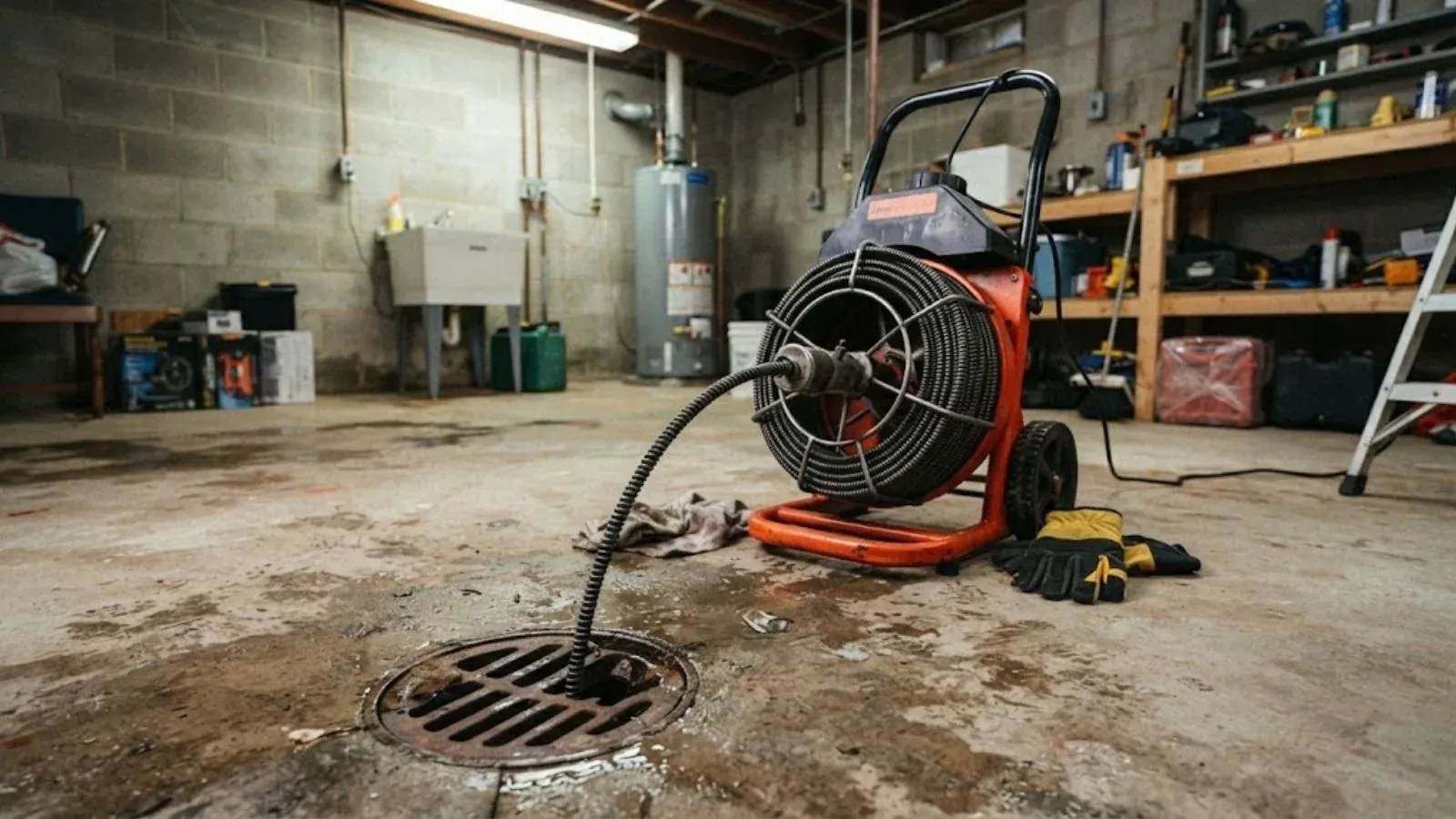
| Drum machine (cabling) | A powered drum spins a thicker cable with interchangeable heads through longer branch and main lines. | Roots, packed paper and stubborn plugs deeper in the system. | A cutter head clears a channel, but a greasy coating can remain on the pipe wall. |
| Hydro jetting | A hose forces high-pressure water out of a nozzle that scours the whole pipe circumference. | Grease, scale and sludge that keep re-forming after a snake visit. | It needs a sound pipe and a clear access point, and it does not repair damage. |
| Camera look | A small waterproof camera on a flexible rod shows the inside of the line. | Repeat clogs, unknown causes and any line that may be cracked. | It diagnoses and does not clear the blockage by itself. |
Our hydro jetting page explains when scouring the full pipe wall is worth choosing over a cable.
Why the kitchen sink clogs differently from the bathroom drains
A kitchen sink drains hot, fatty water. As the water cools inside the pipe, grease turns waxy and clings to the wall, catching food bits and coffee grounds. Over months the opening narrows like an artery until a small piece of food closes it.
That is why the kitchen line often slows gradually, then stops without warning. A cable can break the plug, but the cooled layer often remains. A technician looks at what comes back on the cable. Wax and paste mean grease, while stringy wet fibers suggest something different.
Garbage disposals add a second layer. They grind scraps small enough to pass the disposal, yet those fine particles settle in the first horizontal run behind the sink. A dishwasher drain that ties in above the trap can also back up into the sink basin, which people often mistake for a clog in the sink itself.
Bathroom clogs are mostly hair plus soap scum bound together. Those usually sit in the trap or in the first few feet of the branch and respond well to a hand auger.
What decides the price of clearing a drain
Drain work is priced by the job and not by a flat menu, because two clogs that look the same at the sink can be very different in the pipe. These are the factors a technician weighs.
Chemical cleaners and other home fixes to skip
Some quick fixes make the next plumber's job harder or damage the pipe.
- Caustic and acid openers. They generate heat as they work, which can soften older plastic joints and stress metal pipe, and they rarely clear a full plug.
- Mixing products. Combining two openers can release toxic gas. Never pour a second product on top of a first one.
- Plunging a double sink. Without blocking the second drain, pressure just moves through the shared tailpiece. Seal the other side first.
- Running the disposal on a clog. The blades cannot clear a downstream plug and the motor strains against it.
- Forcing a short snake past resistance. A cheap hand tool can wedge, kink or scratch a pipe. If it will not advance, stop.
- Ignoring a slow drain. A drain that is half closed is cheaper to clear than a drain that is fully blocked at midnight.
Colton hard water, older drain lines and shared stacks
The City of Colton's Consumer Confidence Report lists average total hardness of about 207 mg/L, roughly 12 grains per gallon, which falls in the very hard band of the federal scale. Hard minerals combine with soap to form scum that coats drain walls. In a tub or bathroom sink that scum is what binds hair into a plug.
About 52% of Colton's homes were built before 1980, according to the city's housing data. Drain lines in older houses are often cast iron or galvanized steel, and both can roughen inside as they age, which gives debris something to catch on. A camera look shows whether a repeat clog is a rough pipe or a one-time event.
Another 32% of units are multifamily. In an apartment building, several units can share one vertical drain stack. If a lower unit backs up while an upper unit stays dry, the blockage is in a shared line that the property manager may need to approve.
When a drain line leaks or the clog keeps coming back
A drain line leak is a different problem from a clog. Signs include a damp cabinet floor with no supply leak, a musty smell, stains on a ceiling below a bathroom and sometimes water showing up at the base of a wall after the tub drains. Clearing the line will not fix it, because the pipe or joint needs repair.
If the same drain clogs again within weeks, treat the clog as a symptom. A camera look can find a belly where water pools, a cracked joint admitting roots or heavy scale, and the sewer inspection page describes what that video shows. Where the main line itself is the problem, sewer line cleaning covers clearing it from the cleanout.
Homes in nearby Rialto and Grand Terrace show the same patterns, and our Rialto plumbing page lists the services we dispatch there.
Frequently asked questions
Yes. The 24/7 line takes drain calls at any hour, including overflowing fixtures and sewage in a floor drain. We ask a few quick questions about which drains are affected so the right tools go on the truck, and we offer same-day appointments when available.
Snaking usually means a hand-cranked auger for a single fixture. Cabling means a powered drum machine with a thicker cable that reaches farther and can carry cutter heads for roots or heavy buildup. A technician picks one by how far the clog is from the opening.
Grease that cooled on the pipe wall often stays behind after a cable breaks the plug, then catches new food particles. A camera look or hydro jetting removes the coating. Changing what goes down the sink and flushing with hot water after dishes also helps.
It is better not to. The liquid sits in a stopped pipe and can splash on the technician or react with a second product. It can also stress older pipe joints. Plunging gently or waiting is the safer choice.
Often a pop-up stopper cleaned by hand is enough, since hair and soap collect on it. If the sink is still slow after that, the clog is in the trap or the branch and a small auger usually clears it.
Yes. Shower and tub drains collect hair and soap scum. Yard drains and grates collect leaves, silt and roots and are cleared from the grate opening. Tell us which drain it is when you call.
A clog stops or slows water at the fixture. A leak shows as damp material, odor or stains near the pipe, sometimes with normal drainage. If both happen at once, the clog may be pressing water out through a weak joint.