
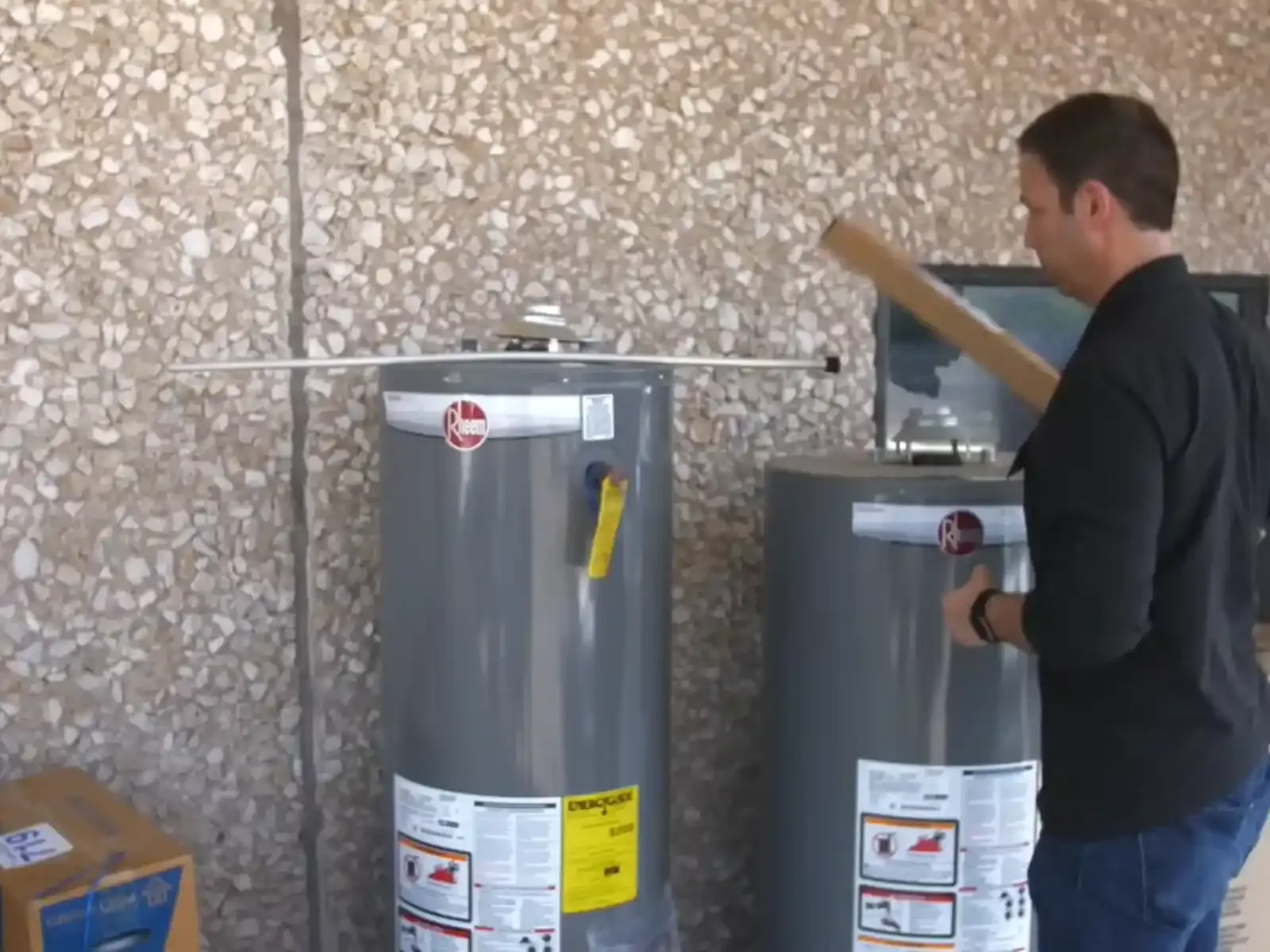
Signs a leaking tank has to be replaced, not repaired
A tank is a sealed steel vessel with a thin glass lining. Once that lining and steel fail, no part swap restores it.
Water seeping from the shell
Water beading on the tank wall, the seam or the bottom edge means the inner tank has corroded through. The wetness often returns hours after you wipe it dry.
A rusted bottom ring or a puddle that grows
Rust staining at the base and a puddle that gets larger after each heat cycle point to a failed vessel. Fittings leak less at the base and more at the top.
Rust-colored hot water
Brown or orange water only from hot taps, with a rotted anode rod, means the tank has begun to corrode from the inside. It may not be leaking yet.
Banging and rumbling that flushing does not cure
Heavy scale hardens into a shell on the tank floor. If a drain test shows hard chunks, the tank is working harder every cycle and the steel overheats.
A repair quote that is close to replacement cost
If a repair would only buy a short extension on an old, scaled tank, replacement is often the better use of the money. Ask for both numbers in writing.
How a same-day tank swap runs once the old heater is condemned
We shut off water, power or gas, and drain the tank to a safe point, usually through a hose to a drain or outside. After that we disconnect the water lines, the gas connector or electrical whip, and the venting on a gas unit. The old tank is carried out and removed.
The new heater is set level on a pan or stand where required, and connected with new supply lines and a relief valve discharge pipe. We open the cold side, purge air from the system, and check every joint under pressure before we energize or light it. Then we test thermostat settings and flue draft on a gas unit.
Same-day appointments are available when schedules allow, and a standard tank swap is often a single visit. A change of fuel, a new location or work on the gas line makes the job longer, and we say so up front.
Tank failed and water is spreading right now: what to do before we arrive
A failed tank can release dozens of gallons in a short time, and a flooded closet or garage can reach drywall and flooring quickly. The 24/7 line is open for replacement calls at night and on weekends and dispatch starts when you call.
Here is what protects the house until we are there.
- Close the cold supply valve above the heater. Turn it clockwise until it stops. If the valve is stuck, shut the main house valve, which you should locate before you need it.
- Cut the power or the gas control. Turn off the breaker for an electric tank, or the gas control for a gas tank. Never leave an element powered in an empty tank.
- Stay out of standing water near electrical items. Keep children and pets away. Do not touch outlets, cords or the panel if water has reached them.
- Gas smell means leave. Walk outside, then call the gas utility or 911. Do not use a phone inside or flip any switch.
- Move what you can and document the damage. Lift boxes and belongings out of the water, take photos and note the time for your insurer. Do not tear out wet materials before the claim is photographed.
Capacity, fuel type and the gas-to-heat-pump question
Tank size follows how many people use hot water at the same time. The number that matters is the first-hour rating on the label, not only the gallon capacity. A household with several bathrooms and back-to-back showers usually needs a bigger first-hour number than one with two people.
On fuel type, the City of Colton water heater permit page says a gas-to-electric conversion is not allowed under the alteration path. That includes swapping a gas tank for an electric or heat pump unit. If you want a heat pump water heater to replace gas, ask the City of Colton Building Division what path applies before you buy anything.
The city page does not state rules on venting, seismic strapping, expansion tanks, relief valve piping or drain pans, so we will not present any of those as Colton rules. Ask the Building Division which California Plumbing Code edition applies to your job. We install to the manufacturer instructions and the code, and we can describe what a given heater needs.
Choosing between a standard tank, a larger tank and a tankless swap
Replacement is the moment to decide whether to keep the same kind of heater.
| Option | Fits when | Watch for |
|---|---|---|
| Same-size gas or electric tank | The heater met your needs and the location is staying the same | Same maintenance needs, including a flush plan in very hard water |
| Larger tank | The old one ran out of hot water in normal use | Space, weight and a longer recovery time after use |
| Tankless gas unit | Wall space and ventilation exist and demand is high | The gas line may need upsizing, and a permit path applies |
| Heat pump (hybrid) electric tank | You have open air and an existing electric supply | Fuel-change limits for gas homes, condensate drain, noise |
| Different location | The old spot floods or limits access | A new location needs rough plumbing and final inspection |
Moving to a tankless unit or a new fuel is a planning conversation. See tankless water heater service and water heater installation for those details.
What to tell us when you call about a failed tank
A few details help us bring the right heater and parts the first time.
- Fuel type. Gas, electric or heat pump, as shown on the data plate or the shutoff lines.
- Tank size and location. The gallon size on the label, and whether it sits in a closet, garage, attic or outdoor enclosure.
- Where the water is coming from. Shell, fittings, relief valve pipe or drain valve, and whether the shutoff stopped it.
- Access. Stairs, narrow doors, locked gates or parking limits that affect carrying a tank in and out.
- Water damage. Whether water reached walls, flooring or a neighbor's unit, so we can flag it for drying.
- Who owns the property. If you rent, we need the owner's approval for the work and the permit.
What shapes the price of a water heater replacement
A swap of one tank for another is among the more predictable plumbing jobs, but the total still varies. These are the factors, so the written price makes sense when you receive it.
The City of Colton permit path for a water heater change-out
The City of Colton's water heater permit page says the owner or an insured California-licensed contractor can pull the permit. A C-36 plumbing contractor qualifies, as does a B contractor under the multiple-trade rule. You can check any contractor's license on the California Contractors State License Board website before work begins.
The application needs an ID, a signed CF1R-ALT-01-E energy compliance form and a site plan. An outdoor install needs Planning approval first. A change-out at the same location gets one final inspection, while a new location gets a rough plumbing inspection plus a final.
The Building Division is at 659 North La Cadena Drive in Colton, and it schedules inspections through its inspection line. Call by 4 pm to book an inspection for the following day. If your home is in nearby Rialto, that is a different city with its own building office, so do not assume the same steps apply.
Frequently asked questions
Yes. The 24/7 line is open on nights, weekends and holidays, and a failed tank gets dispatched as urgent. Same-day appointments are available when schedules allow. Shut off the cold supply and the power or gas control while you wait.
No. A leak at a connector, drain valve or relief valve can be repaired. A leak from the tank shell or seam means the vessel has failed, and replacement is the answer. A technician can tell the difference in a few minutes. For the repair side, see water heater repair.
The City of Colton water heater permit page says gas-to-electric conversion is not allowed under the alteration path. That page does not describe other paths, so ask the Building Division what applies to your home before you buy a heat pump unit.
Start with how many people use hot water at once and how many bathrooms you have, then compare the first-hour rating on labels. The gallon capacity alone can mislead. We can recommend a size once we know your household.
Those are questions for the City of Colton Building Division, because the permit page does not state them. We install to the manufacturer instructions and the California Plumbing Code, and we can tell you what your heater requires.
The city page treats water heater work as permitted. A same-location change-out gets one final inspection, and a new location gets rough plumbing plus final. Outdoor installs need Planning approval first. Confirm fees and timing with the Building Division.
It depends on the heater in stock and the site conditions. Same-day appointments are available when schedules allow, but we do not promise an arrival time. A standard tank swap is often one visit.