
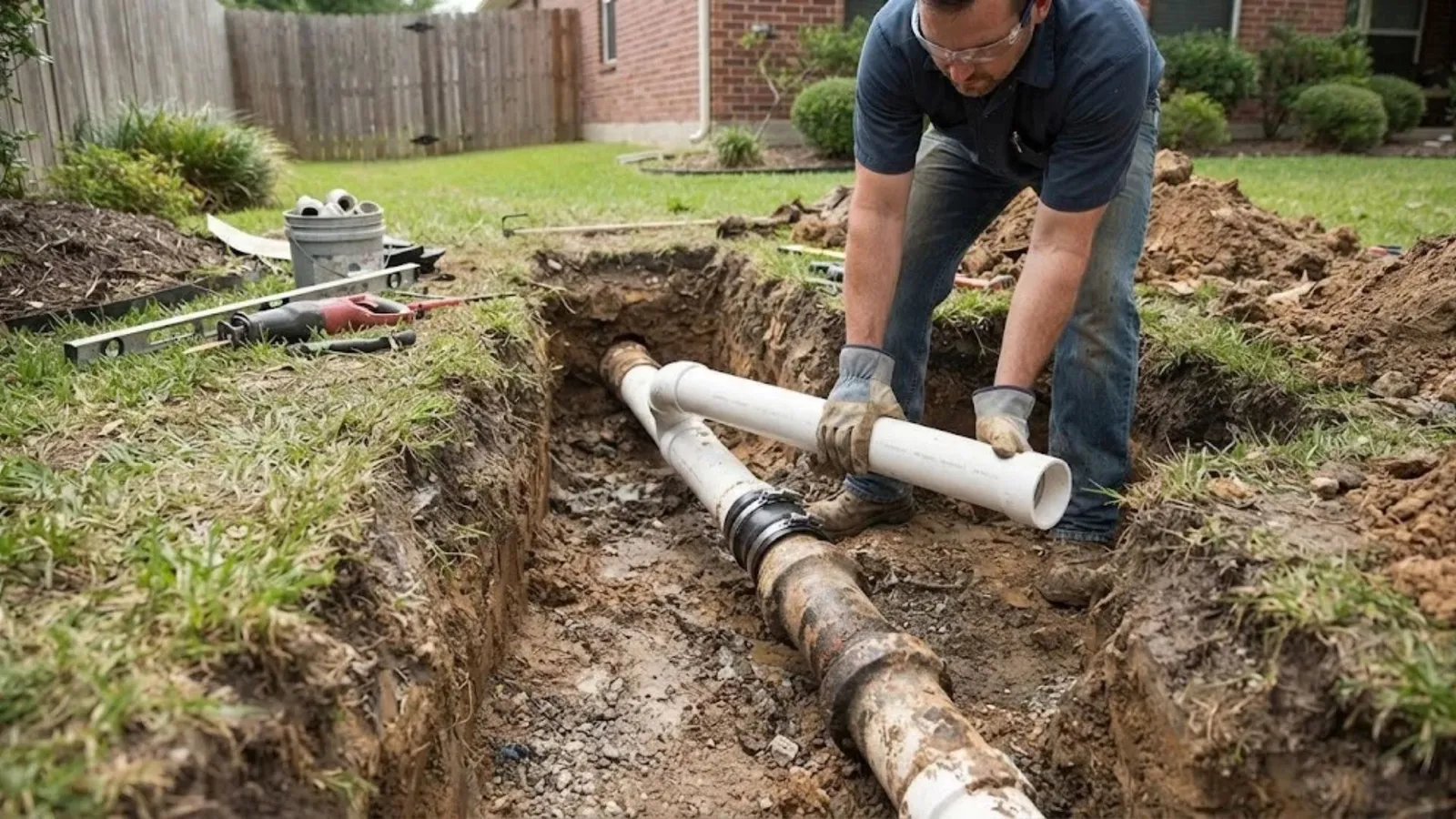
Sewer backup symptoms that point to a failed pipe, not a clog
A backup that clears with a cable and does not return was a clog. A backup that returns within days or weeks, even after a good cleaning, suggests the pipe is damaged. Roots, a crack, a joint that slipped or a low spot that holds water can all bring the blockage back.
Other clues show up outside the house. A soft, sunken or unusually green patch in the yard along the line, a sewer smell near the foundation or a new puddle with no rain can mean the pipe is leaking into the soil. Gurgling in toilets when the washer drains and drains that back up in the lowest bathroom first are interior signs.
None of these proves a break. Only a camera and a locator do. We start there so you pay for repair of what is actually wrong, not a guess.
How a damaged sewer line is found, planned and repaired
A repair job follows a fixed order so surprises are limited.
- Clear enough to see. If the line is blocked, the technician first opens it with a cable so the camera can pass. Nothing about the pipe is judged until it can be seen.
- Camera and locate. The camera records the pipe from the cleanout toward the street and a locator marks the surface above any defect, with its depth.
- Choose the method. Spot dig, relining, pipe bursting or full replacement fit different damage. You see the video and the options before deciding.
- Call 811 and handle permits. Digging requires a DigAlert ticket at least two working days ahead. We ask the City of Colton Building Division whether the job needs a permit and inspection.
- Repair and test. After the repair the line is tested and recorded again to confirm water flows without pooling.
Tree roots and the other ways a buried sewer pipe fails
Roots do not break good pipe. They find a joint or crack that already leaks warm, nutrient-rich water and grow into it. Over time the roots thicken and widen the opening, which then catches paper and waste. A cable removes the visible roots, but the opening remains until the joint is sealed or the section replaced.
Other causes include shifting soil that pulls joints apart, a heavy load over a shallow pipe, and a belly where a section settled and now holds water. A belly does not always block flow, but it collects solids and leads to repeated clogs.
Older materials fail differently. Clay pipe has many short joints, which gives roots many entry points. Cast iron corrodes from the inside. Fiber conduit known as Orangeburg can soften and deform. The camera identifies which of these we are dealing with.
Spot repair, lining, bursting or full replacement: how they compare
Each method fits a different kind of damage, and none is best for everything.
| Method | How it works | Fits when | Limit |
|---|---|---|---|
| Spot repair | A short trench exposes the bad section and a new piece is joined in. | One defect is shallow and the rest of the pipe is sound. | Other weak spots further along stay in place. |
| Pipe lining | A resin-soaked liner is pulled in and cured against the old pipe wall. | The pipe is cracked or rooted but still holds its shape. | A collapsed or badly offset pipe cannot be lined without clearing first. |
| Pipe bursting | A head breaks the old pipe and pulls a new one into the same path. | Long runs where trenching is hard, such as under a driveway or patio. | Needs entry and exit pits and a route free of other buried lines. |
| Full replacement | The old line is dug out and new pipe laid with correct slope. | Severe damage, bellies or materials that are failing along the whole run. | More digging and surface restoration. |
The camera video and locate depth decide which row fits, and the price follows the method.
City sewer or septic: which page applies to your property
This page is about the sewer lateral that connects a house to a public sewer. Septic tank and drain field work is a different kind of job, with different equipment and different local rules, and it is discussed on our Bloomington plumbing page. Parts of Bloomington still run on septic, and San Bernardino County has a septic-to-sewer expansion study underway there.
Colton's housing data shows about 52% of homes built before 1980. Lateral pipe in those homes may be clay or cast iron, which age differently from newer plastic. The City of Colton Building Division at 659 North La Cadena Drive handles permits and inspections, so ask there before assuming a repair needs or does not need either.
Where your private line ends and the public main begins depends on the sewer agency. Ask the agency that serves your address before you assume responsibility.
What decides the cost of a sewer line repair
A sewer repair price depends on the pipe and the ground more than on the symptom. The camera and locate work gives the inputs.
Sewage coming up in the house: what to do first
Sewage backing into the home is a health and property risk, so call the 24/7 line right away. After-hours repair and same-day appointments are available when possible, and the first visit focuses on stopping the backup and finding the cause.
- Stop all water use. Every fixture drains into the same line. Stop laundry, dishes, showers and flushing.
- Keep people out of the wet area. Sewage carries bacteria. Keep children and pets out and wear waterproof boots and gloves if you must enter.
- Turn off power to wet areas only if safe. If water reaches outlets or appliances, do not touch them. Shut off the breaker only if you can reach it without stepping in water.
- Do not use chemicals. Strong drain products do not clear a failed pipe and make the work more hazardous.
- Photograph the damage. Take photos of the water line and affected items before cleanup for any insurance claim.
Cast iron sewer pipe repair: corrosion from the inside out
Cast iron was a standard drain material for decades and is still found in many older homes. It rusts on the inside, forming rough scale that narrows the pipe and catches debris. In time the wall can crack or flake away entirely.
The camera shows scale as dark, rough surfaces and sometimes exposed pits. Light scaling can be cleaned. A cracked or paper-thin section is a candidate for relining or replacement. We never judge cast iron by looking at the outside, because a pipe can look sound and be nearly open inside.
Pipe lining and epoxy lining under a slab: what they can and cannot do
A liner is a flexible tube soaked in epoxy resin. It is pulled or inverted into the old pipe, inflated and cured so it hardens into a new pipe inside the old one. It can seal cracks and joints without opening the yard, which helps when the line runs under a slab, a driveway or a mature tree.
It is not a cure for everything. The old pipe must be cleaned and open enough to accept the liner, and a collapsed section or a severe offset needs a dig first. A liner slightly reduces the inside diameter and cannot fix a belly that holds water.
Under a slab, relining avoids breaking concrete, but connections and fittings still need to line up. Our sewer inspection page explains the video that decides this, and sewer line cleaning covers the simpler case where the pipe is sound and only blocked. For nearby homes, see the San Bernardino plumbing page.
Frequently asked questions
Yes. The 24/7 line takes sewer backup calls at all hours. Night work focuses on stopping the backup and finding the cause with a camera, and we offer same-day appointments when available for the repair itself.
A clog clears and stays clear. A broken or rooted pipe brings the backup back, sometimes with yard symptoms like a sunken patch or odor. A camera inspection gives a definite answer.
Sometimes. Lining and pipe bursting use small access points and avoid a long trench. They need a pipe that is open enough for the tool. The camera decides if the line qualifies.
It is a way to install new pipe along the old path using pipe bursting or similar methods, with pits at each end and no long trench. It suits long runs under hard surfaces.
Light scale can be cleaned. A pipe with cracks, flaking or heavy corrosion is better lined or replaced. The camera shows the condition inside, which the outside never reveals.
Septic problems involve the tank and drain field and need different service. Our Bloomington page discusses them. This page covers lines that connect to a public sewer.
Permit rules depend on the type of work and the agency. Ask the City of Colton Building Division, and we will coordinate once the scope is known. Digging requires a DigAlert call at least two working days ahead.