
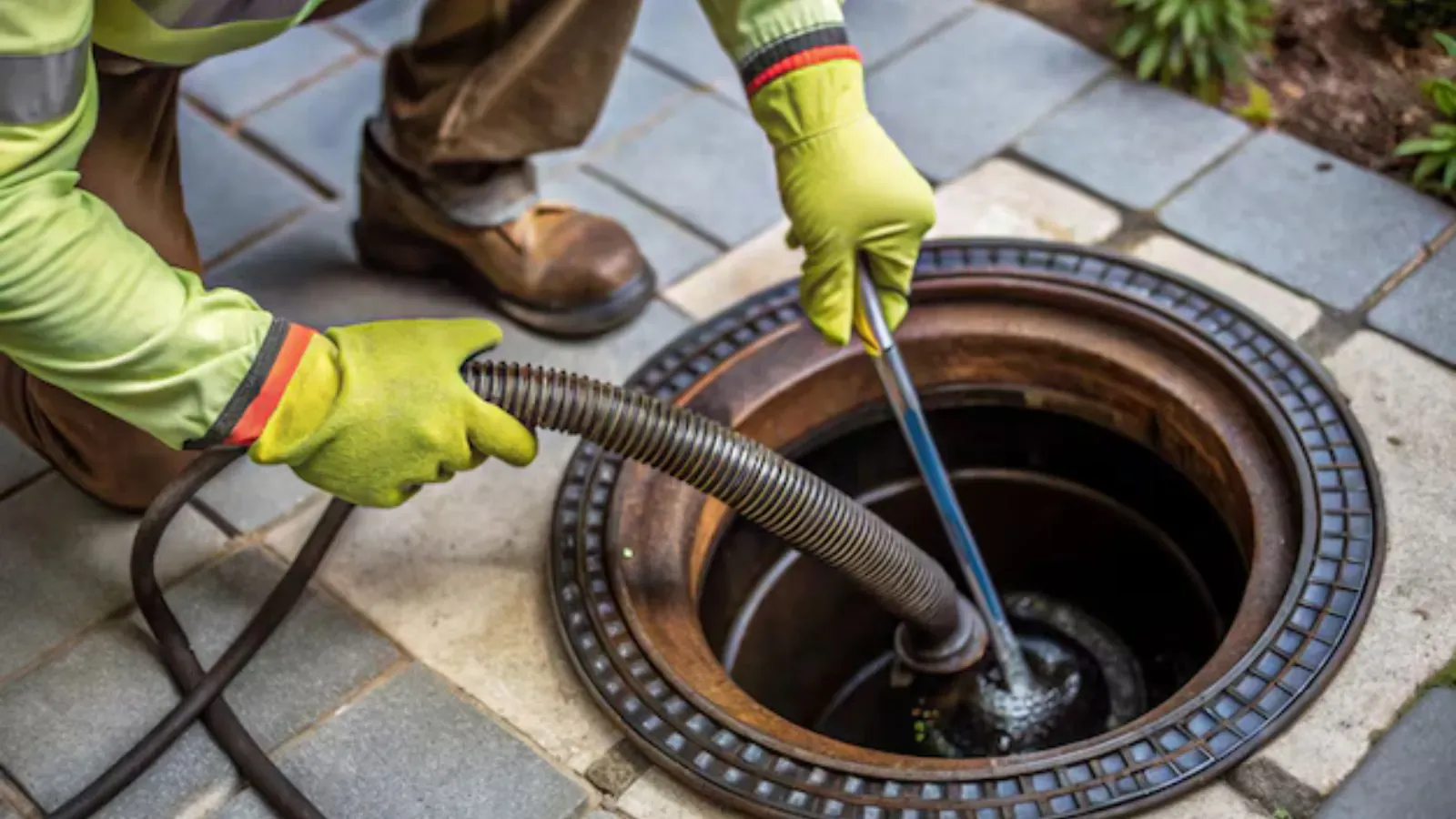
Snaked it and it came back: why repeat clogs return
A cable cuts a channel through a blockage. It does not scrub the pipe wall. If grease, scale or sludge lines the pipe, the opening is still narrow and the next load of waste catches again. That is why a drain can run well for two weeks, then slow once more.
Roots work the same way. A cutter removes the part inside the pipe, but fine root hairs stay in the joint and regrow. Jetting can wash those fibers out and flush the debris downstream, which a cable alone leaves in place.
If your pattern is repeat clogs in the same line, the cause is probably the wall of the pipe or a defect in it, not the last item that went down. The camera tells us which.
Signs a line needs scouring and not another snaking
These patterns point to build-up along the pipe wall.
A clog every few weeks
The same drain slows on a regular cycle. That rhythm usually means a coating narrows the pipe until it closes.
Gurgling across several fixtures
Air moving through a partly blocked main shows up in toilets and tubs. It is a sign of reduced capacity and not just one clog.
Greasy kitchen line
Restaurants and busy households pour fat down the sink. Cooling fat forms a hard layer that cables do not remove.
Slow flow after a cable visit
If water drains but never at full speed, the plug is gone and the coating is not.
Roots from a nearby tree
Hair-fine root growth entering at joints is common in older clay and cast iron lines and tends to recur.
What a high-pressure water jet actually does inside a pipe
A jetting hose ends in a nozzle with several small openings. Most face backward to pull the hose forward. A few face forward or outward to cut through the plug and strike the pipe wall at an angle. As the hose is pulled back, the spinning spray scours the whole circumference.
The water then flushes loosened material downstream to the sewer main. That is the advantage over a cable, which leaves the loosened debris to settle. Different nozzles suit different jobs, from a rotating cutter for roots to a wide spray for grease.
The method does not remove everything. Hard mineral deposits can resist the spray, and a heavy root mass may need a cable first to open a path. A technician chooses the order, sometimes cable then jet.
How a jetting visit runs, from camera to final check
The sequence matters because jetting should never be the first look at an unknown pipe.
- Camera inspection. A camera on a flexible rod goes in through the cleanout. It shows the pipe material, the position of the clog and any cracks, offsets or sags.
- Choose the access point. Jetting needs a clear opening large enough for the hose. Most jobs use the main cleanout, and some use a removed toilet or a roof vent.
- Match the nozzle. The technician picks a nozzle for grease, scale or roots and starts at a modest pressure so the pipe is not stressed.
- Jet and flush. The hose advances through the line, then is pulled back while the water scours the wall. Repeated passes clear heavier build-up.
- Verify with the camera. A second look confirms the wall is clean and shows what the cleaning revealed, such as a crack that was hidden under debris.
Jetting, cabling and repair: what each one fixes
Match the tool to what is actually wrong with the pipe.
| Problem found | Cable alone | Hydro jetting | Repair or replacement |
|---|---|---|---|
| Single soft plug | Usually enough | Not needed | Not needed |
| Grease or scale coating | Opens a channel only | Strong fit | Not needed |
| Root hairs at joints | Cuts roots, leaves fibers | Good fit after a cable pass | Joint repair if roots return fast |
| Cracked or collapsed pipe | Can catch and worsen damage | Not suitable, may force water into soil | Needed |
| Belly (sag) holding water | Clears passing blockage | Clears debris from the low spot | Needed to correct the sag |
The camera result decides the row, not the symptom alone.
What drives the cost of a jetting job
Jetting involves a larger machine, more water and more setup than a hand auger, so it is priced differently. Several factors move the number.
Pipe condition limits and honest alternatives
Jetting is not safe on every pipe. A line that is cracked, offset at the joints, collapsed or made of brittle old material can be damaged by water pressure, and the spray can force water out through gaps into the soil. This is the main reason we do not jet blind.
If the camera shows damage, we say so and explain the options. A cable pass may open the line for now. A localized fix can repair one section. A longer fix can reline or replace the pipe, which our sewer line repair page describes in detail.
Some jobs do not need jetting at all. A single hair clog in a tub responds to a hand tool, and our drain cleaning page covers routine clearing. We would rather recommend the smaller job when it fits.
Hard water, older pipe and why Colton lines scale up
The City of Colton's water quality report lists average hardness near 207 mg/L, roughly 12 grains per gallon, in the very hard range. Dissolved minerals can build as scale on surfaces that stay wet, and they bind with soap and grease into hard coatings on drain walls. A coating like that is the kind of problem jetting is built for.
City housing data shows about 52% of homes were built before 1980, and the largest single group, 28.5%, was built from 1980 to 1989. Pipe from those decades can be cast iron, clay or early plastic, each with its own limits. A camera look tells us which material we are working in before any pressure is applied.
Neighboring Loma Linda and San Bernardino homes share some of this housing mix, and our Loma Linda plumbing page covers how we dispatch there.
Backup in the house right now: what to do before jetting begins
A line that is backing up into floor drains, tubs or toilets is urgent. Call the 24/7 line, and ask for a same-day or after-hours appointment. Jetting after hours is available when conditions allow it, and the camera still comes first.
- Stop all water use. Do not run the washer, dishwasher, shower or toilets. More water only adds to the overflow.
- Leave the cleanout capped. A full line can spill from an open cleanout. Let the technician open it with the right equipment.
- Find the cleanout. It is often a capped pipe near the foundation, in a side yard or by the garage. Clear plants and boxes away from it.
- Protect the lowest drain. Water backs up at the lowest opening first. Move belongings off the floor near a shower, tub or floor drain.
- Avoid chemicals. Drain openers in a flooded line can burn skin and do not help jetting.
Frequently asked questions
Yes. The 24/7 line takes calls at any hour when a main line is backing up. We start with a camera look so the pipe is checked before any pressure goes in, and we offer same-day appointments when available.
Often yes, if the cause is grease, scale or sludge on the pipe wall. If the camera shows a crack, a sag or a joint offset, jetting will only clear the debris and the clog will return until the pipe is repaired.
On sound pipe at a controlled pressure, it is a standard method. On cracked, collapsed or very old brittle pipe, pressure can worsen damage. That is why we look first and choose the nozzle and pressure to match the pipe.
It can remove small roots and wash out fibers at joints, especially after a cable pass opens a path. A thick root mass may need cutting first. Roots grow back if the joint stays open, so a repair may be the lasting answer.
Because the right pressure depends on the pipe. The camera shows material, damage and the location of the blockage, and it lets us show you what we found.
There is no single schedule. A greasy restaurant line may need regular service, while a home line may need it only after repeat clogs. The camera shows how fast build-up returns.
We tell you before work starts. Alternatives include cabling for a simple plug, a localized repair, relining or replacement. You approve the written price for whichever route you choose.